
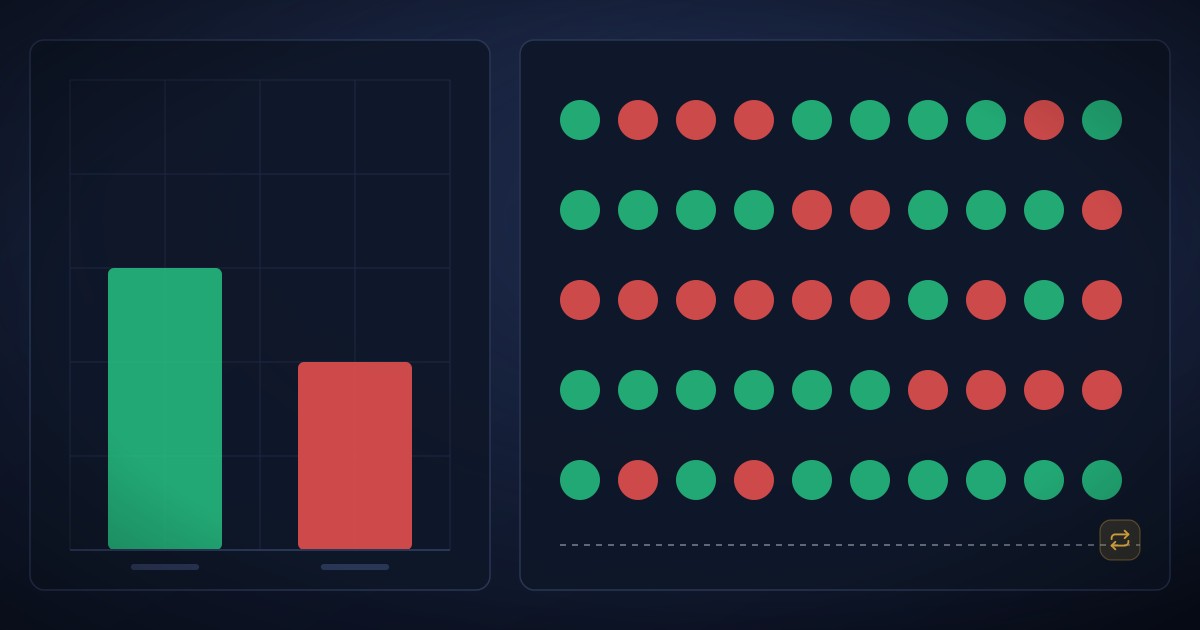
If an event truly has a calibrated sixty percent probability, the other outcome still has forty percent. Seeing the less likely outcome once does not disprove the estimate. Seeing the favoured outcome once does not validate it either.
Evaluation requires a sequence of preserved forecasts and a comparison between stated probabilities and observed frequencies. Dependence between observations also matters, because a large-looking count may contain less independent information than expected.
This changes how an analyst speaks. A preference can be expressed clearly without requiring every result to confirm it. When the other outcome occurs, there is no need to invent a rescue story. The possibility of being wrong was already part of the forecast when it was written.
لماذا يخطئ التوقع المرجح أحيانا
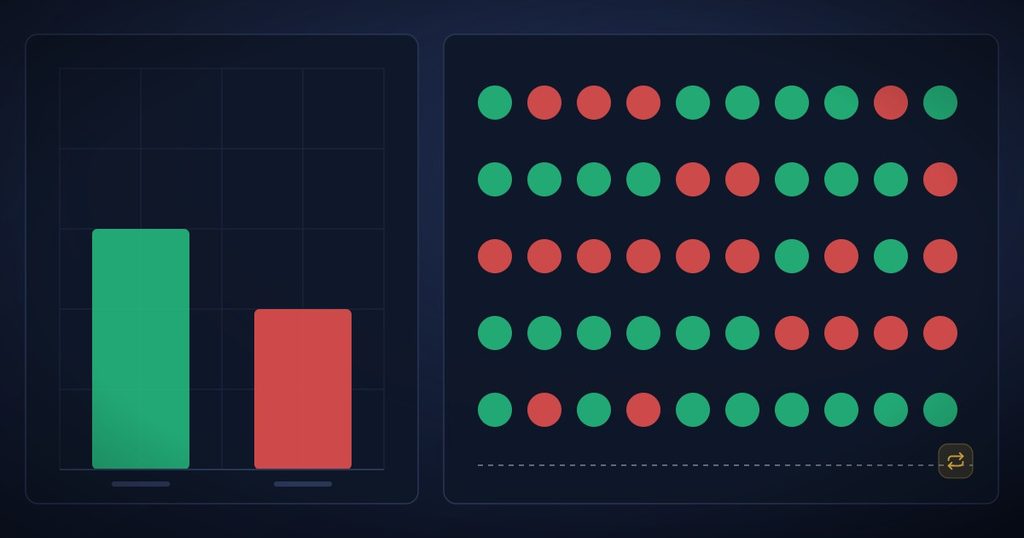
لو كان احتمال حدث ما ستين في المئة وكانت النسبة مضبوطة فعلا، فبقاء أربعين في المئة للحدث الآخر جزء من التوقع نفسه. وقوع النتيجة الأقل ترجيحا مرة واحدة لا يهدم التقدير، كما أن وقوع النتيجة الأرجح مرة واحدة لا يثبته.
المراجعة تحتاج إلى سلسلة من القراءات المحفوظة، ومقارنة التكرار الفعلي بالأرقام المعلنة. وعندما تكون المشاهدات مترابطة، يجب الانتباه إلى أن عددها الظاهري قد يبالغ في مقدار الأدلة.
هذا الفهم يغير نبرة المحلل. يستطيع إعلان ترجيحه بوضوح، ثم استقبال نتيجة مخالفة دون اختلاق تفسير ينقذ التوقع. الاحتمال يحمل فرصة الخطأ منذ لحظة كتابته.

