
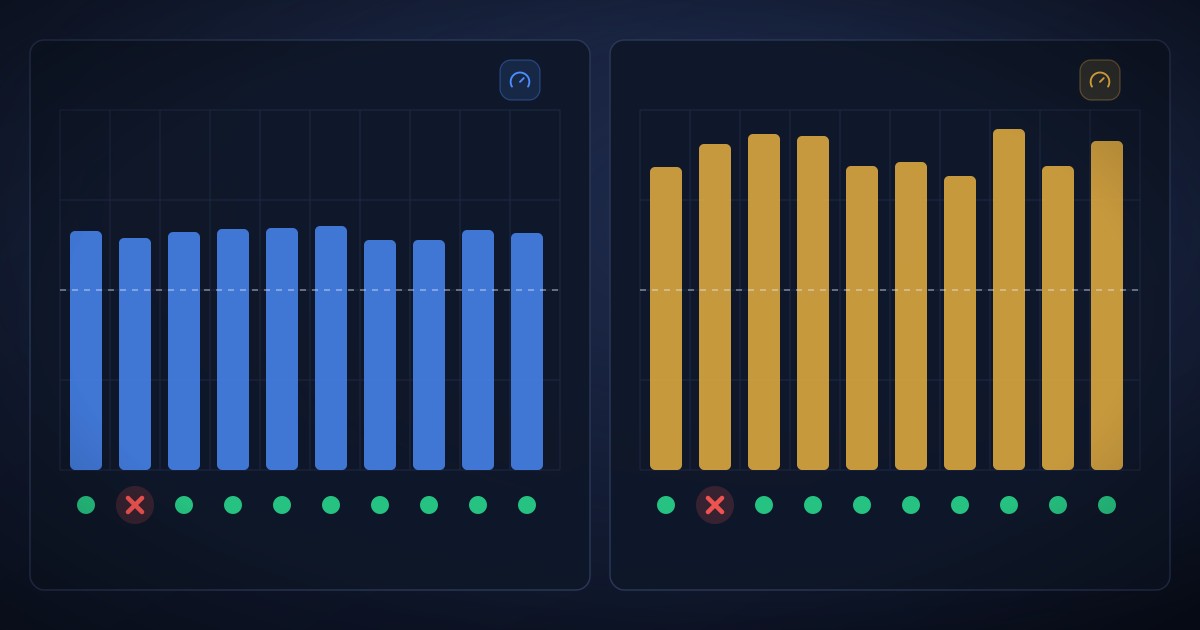
Two models can call the direction correctly equally often while expressing very different confidence. One may use cautious probabilities and the other near certainty. When they miss, the degree of overconfidence differs even though the accuracy count is identical.
Probabilistic evaluation therefore uses measures such as the Brier score, which compares stated probabilities with binary outcomes. Lower is better, provided the models use the same cases and event definition. The score does not calculate trading profits or costs.
Directional accuracy is useful within its scope. It cannot by itself establish calibrated probabilities, a useful price distribution or a sound financial decision. Each claim needs a measure that matches the question being answered.
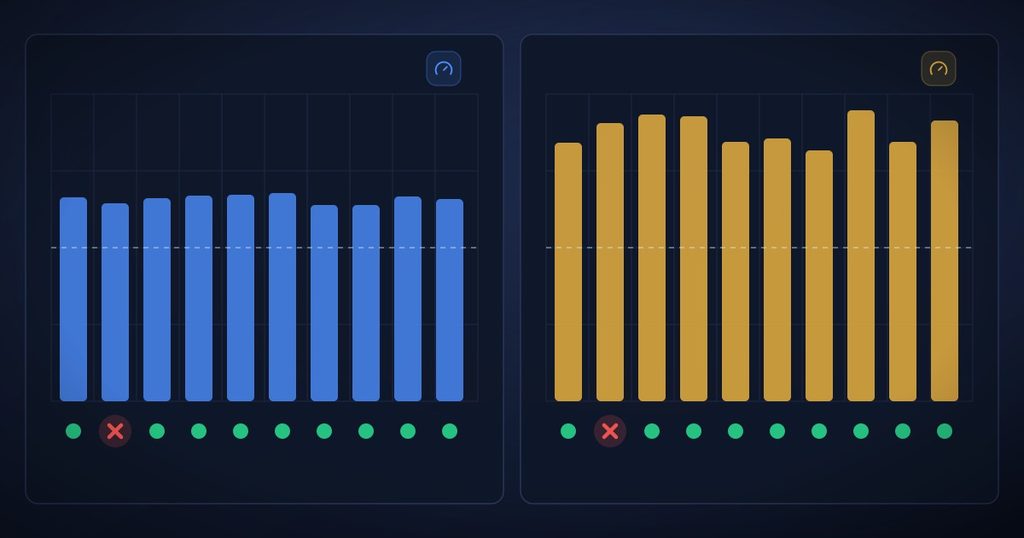
دقة الاتجاه لا تكفي لتقييم التوقع
قد يتنبأ نموذجان بالصعود في العدد نفسه من الحالات، لكن أحدهما يمنح احتمالات متحفظة والآخر يعلن يقينا كبيرا. إذا أخطآ، يختلف مقدار المبالغة في الثقة رغم تساوي عدد الإجابات الصحيحة.
لهذا يستخدم التقييم الاحتمالي مقاييس مثل درجة براير، التي تقارن الاحتمال المعلن بالنتيجة الثنائية. انخفاضها أفضل، مع ضرورة المقارنة على الحالات نفسها وبالتعريف نفسه للحدث. وهي لا تحسب أرباح التداول أو تكاليفه.
نسبة الاتجاه الصحيح معلومة مفيدة داخل حدودها. لكنها لا تختبر وحدها جودة الاحتمالات، ولا شكل توزيع الأسعار، ولا صلاحية قرار مالي. كل نتيجة تحتاج إلى مقياس يطابق السؤال الذي تدعي الإجابة عنه.

